
Ella passed away last week at age 84. I have cared for her since she was admitted to the nursing home 2 years ago. Her granddaughter called me wanting to know the cause of death. In old age, the cause of death is often the wrong question, as the end is usually not a single cause but a slow convergence of many.
Ella had a list of common medical issues–hypertension, high cholesterol, type 2 diabetes, osteoarthritis, atrial fibrillation, and chronic kidney disease. She took medication for these, and by the numbers, these conditions were controlled. Numbers, however, only tell part of the story. What, then, did she really die of?
The reality is that her cause of death was multifactorial. The single diagnosis called for on the death certificate was misleading. In advanced age, diverse conditions accumulate and usually contribute to death as they erode physiologic reserve and leave less margin for recovery.
Sudden, unexpected deaths of older adults are estimated at 10%. Even deaths that appear sudden often follow a period of decline. Queen Elizabeth, for example, was photographed standing with the new prime minister just days before her death, yet she had experienced dwindling health and function beforehand.
A step back to look at the big picture revealed that there were multiple small hits to Ella’s health over time. Though we each have our own story, the overall trajectory was a common one. Three years ago, she was living alone, but was gradually having more trouble getting in the bathtub and leaning over to put on her socks and pants because of severe arthritis and extra pounds. Then, she developed diabetes, and the doctor found atrial fibrillation.
Aside from pain with walking, Ella felt reasonably well. She could laboriously get to the kitchen and bathroom with a walker, but spent most of the time watching TV in her recliner. Then, she fell, and after a hospitalization, rehab didn’t result in much improvement. Though she could take a few steps with her walker, she could no longer dress herself or fix meals.
With some heartache, her family moved her to the nursing home. Ella adjusted to nursing home life, mostly in a wheelchair. In the next 2 years, she was hospitalized several times for urinary tract infections with sepsis. Her cognition waned, and confusion periodically engulfed her.
The need for nursing home–level care signaled a poor prognosis. While the average life expectancy of an 82-year-old woman is about eight years, those with the inability to live alone and multiple chronic conditions often live five years or less. This shortened expectancy reflects overall vulnerability, not any single diagnosis.
Each person carries a unique mix of physical and psychological vulnerabilities that ultimately lead to death.
Two weeks before she died, Ella appeared to have another urinary tract infection. She and her family were so tired of going back and forth to the hospital. We deliberated and decided to treat it in the nursing home. She got antibiotics and nursing care from staff who knew her well. But, with being sick and spending more time in bed, her strength faded.
In Ella’s case, the widespread, painful arthritis and the extra weight got the best of her. Life in a wheelchair led to muscle atrophy and shallow breathing. Over time, this made it difficult to clear her throat and increased her risk of aspiration. This cascade was complicated by obesity, depression, and poor sleep.
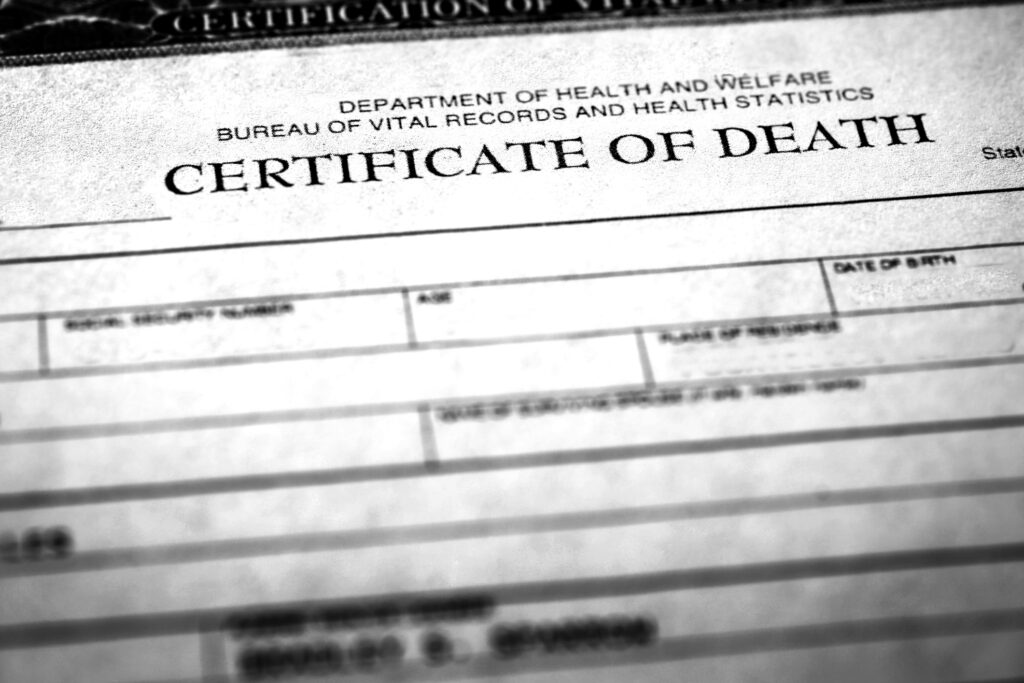
How could I capture this complex scenario on a death certificate? Though there are areas on the death certificate to list a cascade of events and contributing conditions, the insistence on a single primary cause of death deflects attention from the real story of terminal decline that Ella experienced. In some cases, the primary cause of death may be clearer, such as heart disease, stroke, or cancer, but the co-morbidities are not fully considered.
Ella’s last breath was not observed. Staff knew she was weak and failing. Her attentive family decided to enroll her in hospice as they saw that she was eating very little and coughed with every attempted meal. But before the official hospice enrollment, the night nurse found she had passed away between bed checks.
I completed the certificate with Ella’s cause of death as aspiration pneumonia. Contributing factors were osteoarthritis, obesity, diabetes, and hypertension. This didn’t really capture the reality.
The reality is that she died related to the accumulation of several chronic diseases that are intertwined and take their toll on weaker bodies. And our bodies eventually fail.
For those who are very old, a single cause of death does not reflect the reality. Each person carries a unique mix of physical and psychological vulnerabilities that ultimately lead to death. Someday, we may come to understand the interwoven processes that are unique to each of us more fully.
So, what do old people die from? It’s complicated.


Leave a Reply